
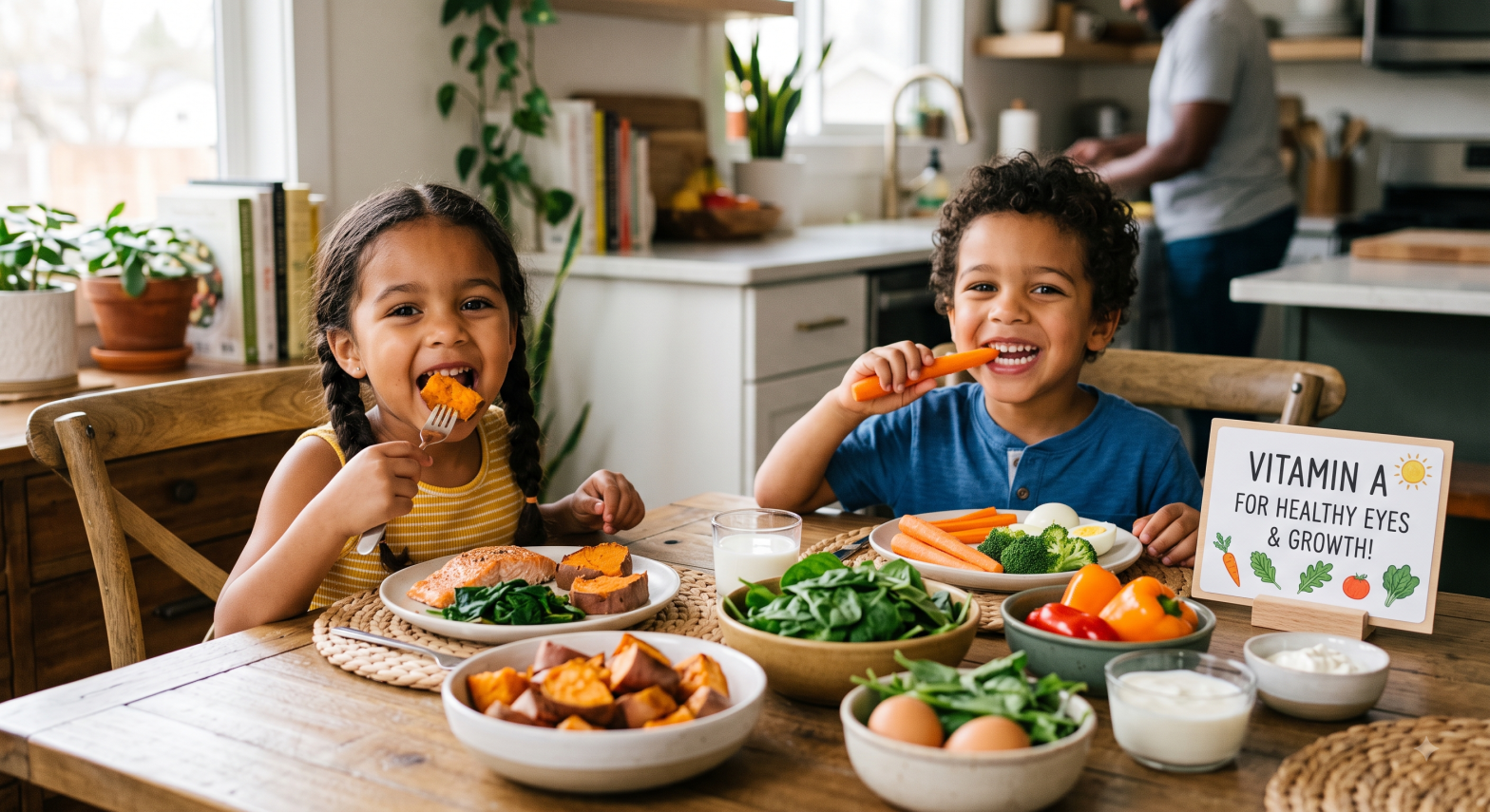
High-dose Vitamin A supplementation was started in 1970, when Indian kids faced nutritional blindness due to Vitamin A deficiency. But now this problem has almost disappeared and is seen in few poor socio economic groups who unfortunately have a poor access to fruits, Fresh Vegetables and Milk Products
Experts and most studies suggest long-term dietary solutions—such as promoting regular intake of green leafy vegetables, dairy, eggs, and rather than depending on Artificial High Doses once in 6 months. High mega-doses (50,000–200,000 IU) can occasionally cause short-term side effects in a small percentage of children, such as vomiting or restlessness.
So , In today’s context, especially in Middle socio-economic groups, who have access to variety of foods High Dose Vitamin A mega-dose supplementation is less relevant where diet and vaccination levels are robust.
However, it remains a vital safety net for vulnerable, high-risk, and undernourished populations.
Meeting a young child’s daily Vitamin A requirement naturally depends on offering a mix of two forms: preformed Vitamin A (retinol, found in animal sources) and provitamin A (carotenoids like beta-carotene, found in colorful plants).
READ BELOW IF YOU NEED MORE AWARENESS ON HOW TO INCREASE VITAMIN A IN YOUR DAILY DIET
Daily Requirements for Children
- Infants (0–6 months): ~350 mcg RAE/day (met entirely through breast milk)
- Infants (7–12 months): ~500 mcg RAE/day
- Children (1–3 years): ~300–400 mcg RAE/day
- Children (4–5 years): ~400–500 mcg RAE/day
(RAE = Retinol Activity Equivalents. 1 mcg RAE = 1 mcg retinol or 12 mcg beta-carotene).
1. Top Animal Sources (Preformed Vitamin A)
Preformed Vitamin A is readily absorbed by the body without needing conversion.
- Egg Yolk: A single hard-boiled or scrambled egg provides roughly 70–90 mcg RAE, making it one of the easiest daily additions for toddlers.
- Whole Milk & Dairy: Full-fat milk, curd (yogurt), paneer, and butter supply readily usable retinol. A cup of whole milk delivers about 100–110 mcg RAE.
- Organ Meats (Poultry/Mutton Liver): Exceptionally rich—even a single tablespoon of well-cooked, mashed liver once every couple of weeks easily covers several days’ worth of requirements.
2. Top Plant Sources (Provitamin A / Beta-Carotene)
Plant pigments need to be converted by the gut into active Vitamin A. Fat significantly improves this absorption.
- Sweet Potatoes (Orange variety): Just 2–3 tablespoons of mashed orange sweet potato contains more than the entire daily requirement for a toddler.
- Carrots & Pumpkin: Pureed or finely grated carrots and pumpkin soup are rich in beta-carotene.
- Dark Leafy Greens: Spinach (palak), amaranth leaves (chaulai), and fenugreek (methi) cooked into purees, dal, or khichdi.
- Orange & Yellow Fruits: Ripe mangoes, papayas, and cantaloupe are highly bioavailable, child-friendly options during weaning.
Crucial for Absorption: Vitamin A is fat-soluble. The beta-carotene in carrots, spinach, or sweet potatoes is absorbed far more efficiently when prepared or served with a small dose of healthy fat—such as a spoonful of ghee, butter, or oil.
Sample Meal Ideas for Toddlers
| Age Group | Daily Meal Addition | Estimated Vitamin A Contribution |
|---|---|---|
| 6–12 months | Mashed orange sweet potato + ghee | Exceeds daily requirement |
| 1–3 years | 1 boiled egg + 1 bowl spinach dal | ~100% of daily requirement |
| 3–5 years | 1 glass full-fat milk + bowl of ripe papaya | ~100% of daily requirement |

