
Featured

Deworming in Children

Possibility of your child getting infested by worms is high after the age of 1 year as children start exploring the surroundings more and likelihood of getting worms increases as habits of mouthing increase. Also, hand hygiene at times be a challenge despite our best efforts. Most commonly, kids would ingest the water while bathing , which in most homes is never filtered.

So one can consider using routine deworming every 6-12 months after the age of 1 year, though there are no strict guidelines to regularly deworm a child. This can vary as per habits and environment of every child.

Symptoms of Worm Infestations

Its a age old myth that if a child is grinding teeth in sleep, it means worms in tummy and IT IS A MYTH ONLY !

Suspect Worms when you notice symptoms like…

  • A child has unexplained repeated episode of pain…
  • Anal Itching at night
  • Presence of worms in stools (seen very late)
  • A good appetite but poor growth or looks very pale on a balanced diet.

Medicines for Deworming.

Various medicines like Albendazole, Mebendazole, Pyrantel, etc are available and Albendazole is most easy to use.

DOSE OF ALBENDAZOLE

  • Age more than 2 years – 400 mg tablet or 10 ml of Suspension
  • Age Less than 2 years- 200 mg (half tablet) or 5 ml of Suspension

SINGLE DOSE IS NOT ENOUGH..

It is important to understand that all available medicines for deworming act only on live worms. No medicine will destroy the eggs already laid by worms. So a single dose will only kill the live worms and the eggs will produce more worms. So one has to repeat a second dose before these new worms from these eggs grow into adults and lay more eggs. This period which is called life cycle of a worm os 10-14 days for most of the types of worms.

Single dose schedule is used in Mass deworming or National Deworming programs to decrease the overall presence of worms community.

Parents should participate in National Deworming campaigns in which a Single dose of Albendazole tablet is given to all school children and remember to give the second dose after 10-14 days to get an absolute clearance.


Post Pic Credits WHO- World Health Organisation News Page

READ MORE TOPICS USEFUL FOR PARENTS

Featured

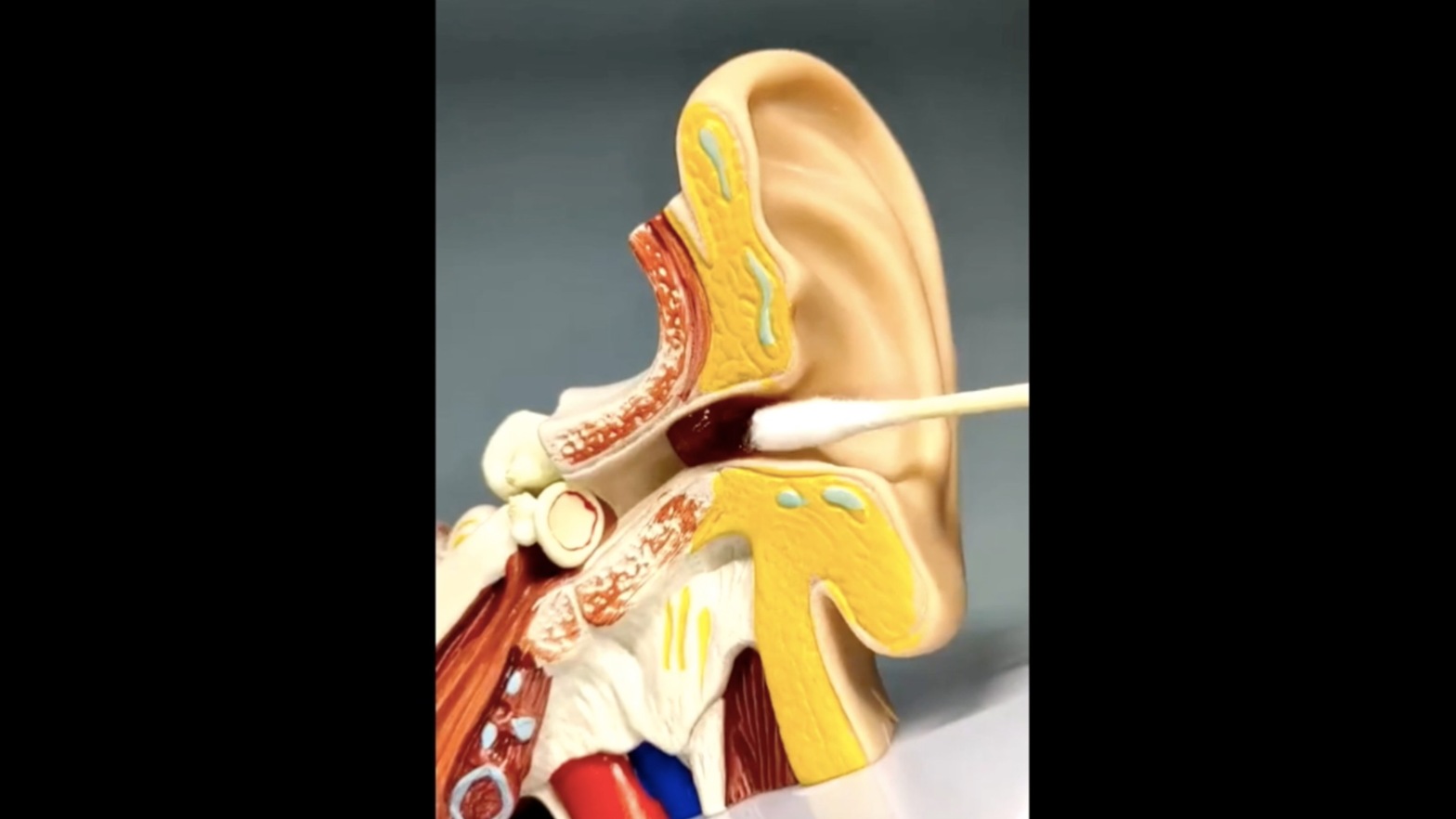
Never remove wax with ear buds

It is a common practice in many families to use ear buds to clean ears. This practice is not recommended. One can do more harm by using ear buds. Ear buds usually push the wax deep inside the ear tube. Body has mechanisms to throw out the ear wax only if it is not used deep inside. But once the wax gets pushed deep inside, then it stays there, gets dried and can hurt also, apart from decreasing the hearing from that ear.

See the video below to understand, why one should not use buds to clean ears..

Video credits : MS Shop

Featured

Antenatal Breastfeeding Classes

Antenatal Breastfeeding / Chestfeeding Preparation Classes

Why breastfeeding preparation classes Classes ?

They help you in taking an informed decision for feeding your baby.

They discuss the pros and cons of different feeding methods.

They teach practical skills about breastfeeding.

They talk about myths surrounding breastfeeding.

They guide you about when to reach out for and who to reach out to , if you are facing challenges..

So many families face challenges while breastfeeding and more often than not its because of either lack of knowledge / skills or lack of timely support.Breastfeeding is a learned skill and often we imbibe what we see around us. Our current  breastfeeding rates are not very great and you will not find many people around you who have exclusively breastfed their babies for the first 6 months thus creating many doubts and confusions in your mind. It helps to get an idea about the true facts and science of breastfeeding and also know that our healthcare system mostly lacks in providing skilled healthcare support to breastfeeding / nursing families.

Becoming parents is a beautiful journey and like any other journey it helps to be prepared in advance! Your family needs to be prepared for the Breastfeeding and Parenting Journey you will embark on the moment your baby arrives! To be prepared one needs to acquire knowledge as well as learn practical skills.One needs to know what to expect, and also have a plan B.

Who all can benefit ?

These classes are primarily meant for every family expecting a baby….for example

Pregnant couples in their 2nd and 3rd trimesters (4th to 9th month) and their families.

Families  with new babies .

3 Second/third time parents who had challenges breastfeeding their previous baby/babies and their families.

Couples having a baby via surrogacy or adoption and their families.

The essential topics that a Breastfeeding Preparation class should cover

  1. Breastfeeding whyshows and wows!! (How breastfeeding works )
  2. How to prepare for the immediate post delivery/adoption period.
  3. How to make your breastfeeding plan, why is it important to convey it to your family and Doctor, how to effectively communicate it to your family and doctor. 
  4. How normal breastfeeding looks like ?
  5. Basic breastfeeding know how 
    •  How to breastfeed?
    • What is normal infant behaviour?
    •  How to know if your child is getting enough?
    •  How to avoid sore nipples?
    •  Father’s role in breastfeeding. 
    •  Why family support is crucial and how to get it?
  6. Common misconceptions and true facts.
  7. Breastfeeding mother’s diet myths and facts.
  8. When to seek support.
  9. Why is making a plan B crucial? Things do not always go as planned, it pays to be prepared 

Additional topics that are very important.

  1. Educating the support system.
  2. Small changes that make an impact on how breastfeeding goes.
  3. Maternal illnesses and medications and breastfeeding.
  4. Overcoming challenges during initial days.
  5. Breastfeeding in times of coronavirus Pandemic
  6. Interpersonal relationships while breastfeeding
  7. Sharing of workload when baby comes
  8. Maternal mental health.
  9. Breastfeeding and gadgets
  10. Joining back work and breastfeeding

ENROL FOR ANTENATAL BREASTFEEDING PREPARATION CLASSES BY DR SHACCHEE

Featured

DO YOU FEEL YOUR MILK SUPPLY IS LESS? DOES YOUR BABY STAY DISSATISFIED AT BREAST?

SOME IMPORTANT FACTS

  1. Most of pregnant people start producing colostrum at around 14-18 week of pregnancy.
  2. No one can check your milk supply by squeezing at your breast / nipples.
  3. If a baby is not being put at the breast immediately at birth, or if the baby gets other things like honey or animal milk etc., the baby might have challenges breastfeeding correctly.
  4. Your baby needs to grab a large part of your breast to withdraw milk from your breast, nipple shape size / shape does not matter if baby is correctly put at the breast at the earliest after birth.
  5. If you have received intravenous fluids / artificial oxytocin or any other drug to induce labor/ steroids, these all can affect your milk release.
  6. If breastfeeding did not happen well in the initial days, milk gets pooled up and many mothers may notice hardness/painful lumps in their breasts by day 3-4 of delivery.
  7. Milk production majorly depends on how effectively the baby is suckling at the breast.
  8. The milk making powders/ tablets mostly are not required.
  9. Even if the initial days were not good, you can still breastfeed.
  10. Some breastfeeding is better than no breastfeeding.

  • If the place where you delivered, did not have skilled lactation support, they might not have known many of the above things and might have doubted your milk supply or nipple size shape etc.….
  • If something like this happens/ has happened with you or your family/ spouse, look for skilled lactation support, and in the meanwhile checkout the resources shared below.
  • If you are concerned that your milk supply might be low…. follow the flow diagram below and see where things might be going wrong.

MOSTLY THE CHALLENGES HAPPEN BECAUSE OF THE WAY BABIES ARE PUT ON THE BREAST AND NOT BECAUSE OF LOW MILK SUPPLY, BUT IF THIS KEEPS HAPPENING FOR SOME TIME, THE MILK PRODUCTION STARTS SLOWING DOWN.


ATTACHING BABY AT YOUR BREAST

ATTACHING BABY AT YOUR BREAST

SIGNS OF EARLY HUNGER

SIGNS OF EARLY HUNGER

Featured

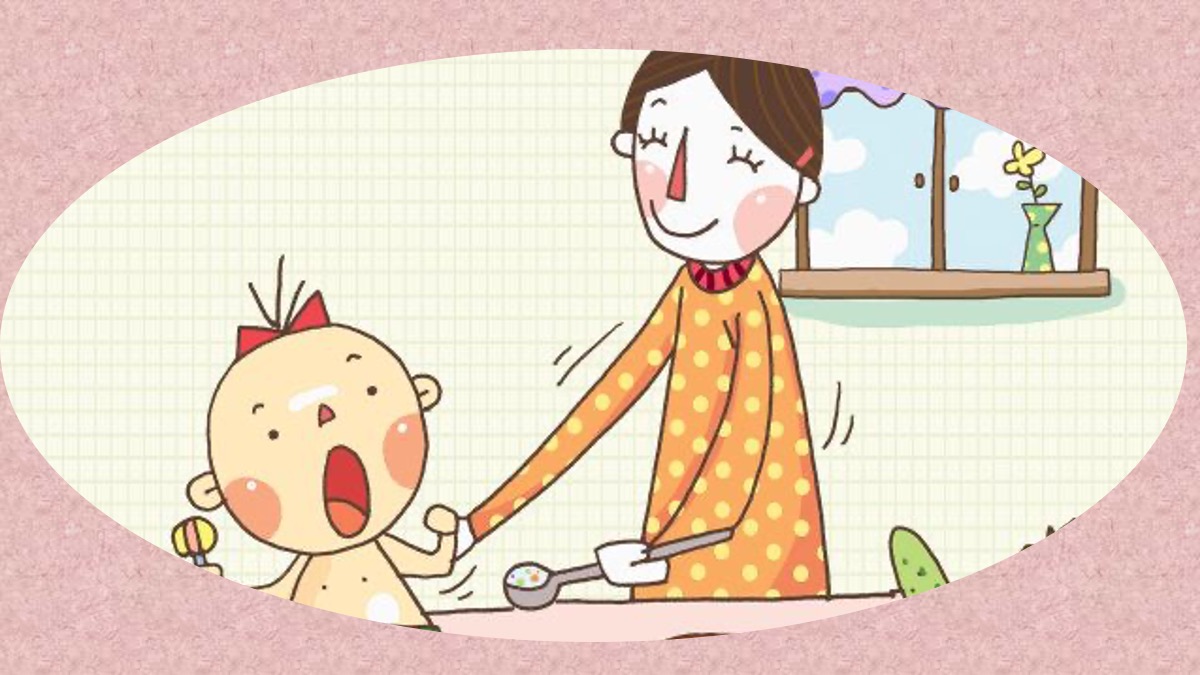
WHEN YOUR CHILD REFUSES TO EAT !

It gets very stressful for parents when their child refuses to eat or is not eating well.

Mostly in those situations, we try to distract(use screens), coax, force or bribe the child into eating.

Why do most of us do that is because of our societal norms around eating. We have our preset notions about eating and we get worried if our child is not following that. More so, in situations where the child is towards leaner side. Often parents get extra worried if the people around them start offering suggestions, thus, making the parents feel judged or incompetent.

Let us explore common reasons for it…..

Why is the child not eating? 

Can it be that we are stressing the child out? Now this can happen in many situations, like always trying to make the child eat, pressing the child to eat, overwhelming the child with coaxing, stressful family environment due to conflicts etc.

Another reason could be that the child is on lots of animal milk and on junk snacks like biscuits / cookies etc.

In children with anaemia, and other chronic illnesses appetite can be suppressed.

A word about breastfed children…..

Breastfeeding complements eating (or vice versa), it is NEVER the cause of child not eating well.

Breastfed babies get 60 percent of their caloric and nutrient requirements from breastmilk in between 6-12 month of age and around 40 percent of same in the 2nd year.

If your child is breastfed and not eating well, explore your way of offering foods, to figure out why your child is not eating well. It is a good idea to introspect and explore your own food related issues and complexes. Also notice if you are leading by example as far as healthy eating is concerned.

Observe your family’s mealtimes and see if you need to work on some family related issues.

Coming to what happens if your child is not eating well….

If your child is breastfeeding, continue breastfeeding on demand and keep offering healthy, balanced complementary food options in a relaxed way and keep modelling healthy eating behavior, your child will slowly settle.

Trust your child’s ability to identify his/ her hunger and let them decide how much he/ she wants to eat. Your job is to provide healthy/ wholesome food options.

If you force them right now, they might rebel once they are able to run away from you and also are prone to develop unhealthy eating patterns in future.

If your child is bottle fed / animal milk fed, work on gradually decreasing the milk intake and offer healthy / wholesome food options in a relaxed environment and of course modelling healthy eating behaviour, your child will soon start settling.

Consult your Paediatrician and ask for an appropriate referral :

#If inspite of following the above general measures your child is not settling

# the child has some difficulty eating/ swallowing

#frequently chokes or gags

# has challenges with particular type / textures of food

PRO TIPS:

# Not eating well for a few days will not do much harm, but if you force / coax/ punish/ bribe / scold etc….these will cause long term challenges . More struggle for you in coming days and eating disorders for your child in future.

# Contrary to popular belief, your child does not need foods high in sugars and fats, they need Nutrient rich food, ie foods containing all sorts of nutrients (Vitamins, minerals, fats, proteins, carbohydrates etc).

So think in terms of balanced meal while preparing food for your child.

# Processed foods are not good for any of us, the so called “health drinks/powders” come under the category of Ultra Processed foods and thus do more harm than benefit. 

Author, Dr Shacchee is a Certified Infant Feeding & Young Child Feeding Specialist. Join her on monthly online Workshop for parents for more detailed knowledge on feeding and nutrition in children. CLICK here to book your session          

Featured

Breastfeeding in COVID Times

All national and International bodies unanimously recommend that irrespective of a person’s COVID Status

  1.  All mothers and babies should be put in immediate skin to skin contact after birth.
  2.  Breastfeeding should be initiated at the earliest.
  3.  Exclusive breastfeeding should be practiced for 1st 6 months of baby’s life (and continued for a minimum of 2 years).

In addition, mum who is COVID positive should wear a mask, and maintain proper hand hygiene.

 The rationale behind these recommendations is that ….

  1. The data till now clearly shows that coronavirus does not get transmitted via breastmilk.
  2. When a lady who is breastfeeding gets infected by coronavirus, her body starts producing disease fighting chemicals (antibodies) which are also secreted in breastmilk, thus providing baby with readymade medicine against coronavirus. 
  3. Breastmilk is the normal food of a human baby and helps in building up a baby’s immunity. Breastfeeding is health for life.

We know, Immune status of a person is a big factor in his /her fight with Coronavirus infection….so the logical conclusion here is to breastfeed.

Some frequently asked questions in this context….

Q1 I am corona positive and I just delivered a baby, what should I do…

– Keep your baby close to you, breastfeed on demand and wear a well fitted mask, maintain proper hand hygiene.

Q2 I am corona positive can someone else give my Breastmilk to my baby if I pump it out and give it to them?

Yes, but first consider 2 things… 

How can you be sure that the other person is negative, maybe he / she is asymptomatic but still corona positive!! 

Breastfeeding is a lot more than just food. It is development of a bond, it is warmth, its security, its love and it’s for proper development of your baby’s face, jaws and teeth.

So, if you are able to directly breastfeed, do that. If you are hospitalized and/or are not able to directly breastfeed, then yes please try and express milk regularly and send Expressed Breast milk for your baby.

Q3 What happens if a COVID positive mother is sick and cannot feed baby directly.

She should be helped with expressing out her milk regularly and send it to the baby. As soon as she is able to, direct breastfeeding should be initiated.

Q4 I am facing challenges breastfeeding….how can I exclusively breastfeed?

Reach out to any experienced Lactation support person  in your area. A trained and skilled Lactation support person should be able to help you through this either via an in person consult or via a video consult. 

If you are COVID positive or  quarantined, you can do a video consult.

Q5 I was COVID Positive when I delivered and I did not feed my baby, now my baby is a few weeks old, and I feel my milk has dried up, can I get my milk supply back? Will it help my baby if I breastfeed my baby.

Yes, and Yes!

Even if you did not feed initially, with a proper plan, patience and effort, you can build up your milk supply and each drop of breastmilk counts so any amount of breastmilk is beneficial.

Look up for an experienced Lactation Support Person who can help you with this.

Q6 I am a breastfeeding mother and today I discovered I am COVID positive, should I continue breastfeeding?

Absolutely yes. When you breastfeed, you pass on Antibodies (against COVID) to your baby. There is a high probability that your child has already contracted the virus before you got tested, so getting antibodies via breastmilk will help protect the baby

Q7 What are the recommendations for those who are pregnant / yet to deliver?

  • Attend an “Online Pregnancy Breastfeeding class”, run by someone experienced.
  • Make sure that you stay at home / stay safe
  • Talk to your doctor in advance about immediate skin to skin contact and earliest initiation of breastfeeding, whatever your COVID status might be.
  • Read recommendations by WHO /Association of Lactation Professionals India /BPNI.
  • Read in person accounts of people who were COVID positive and who breastfed.

Once your baby comes breastfeed. Seek breastfeeding help at the earliest if you are facing challenges. Majority of experienced LCs are equally beneficial via virtual consults too.

VIDEO MADE ESPECIALLY FOR HEALTH CARE PROFESSIONALS
Featured

Tongue-ties and Lip-ties- What Parents Should know

Dr Shacchee Baweja, who is an International Board Certified Lactation Consultant- IBCLC, speaks about the feeding challenges that might be associated with presence of Lip and Tongue ties and also highlights that merely the presence of a band below tongue or lip might not be the reason of challenges and one should work on other aspects of latching before deciding to excise this.

Below is the recording of Dr Shacchee’s session at I-Mumz on eve of International Women’s Day, March 2021

Featured

The confusions and controversies around the Tongue and Lip ties!

  • When we talk about babies with oral restrictions, what does it mean? 
  • My LC tells me my baby has a tie, my paediatrician says it’s nothing, I’m about what to do! confused
  • Why is there so much controversy in it?
  • Why is it that we are seeing so many cases these days? 
  • Is frenotomy a complete solution. I hear many times symptoms do not get better or can even worsen post frenotomy?

If you have any of these questions, Read on….

At the outset it is very important to understand a few facts:

  1. Feeding is an all-body function so just looking at the mouth will not give us the complete assessment of the situation. So even if your baby has obvious ties, there is much more that needs to be assessed and worked on.
  2. We need to look at the whole body.
  3. Breastfeeding is a complex interplay of many factors (Birth, earliest skin to skin contact, initial breastfeeding experiences, infant anatomy, maternal feelings, maternal knowledge, support to the mother, and many more)
  4. There are large knowledge gaps in the health care workers, in relation to skilled lactation support.
  5. Even among lactation Professionals, clinical skills are widely divergent, depending on their qualifications and experiences.

With the above facts in mind lets discuss further.

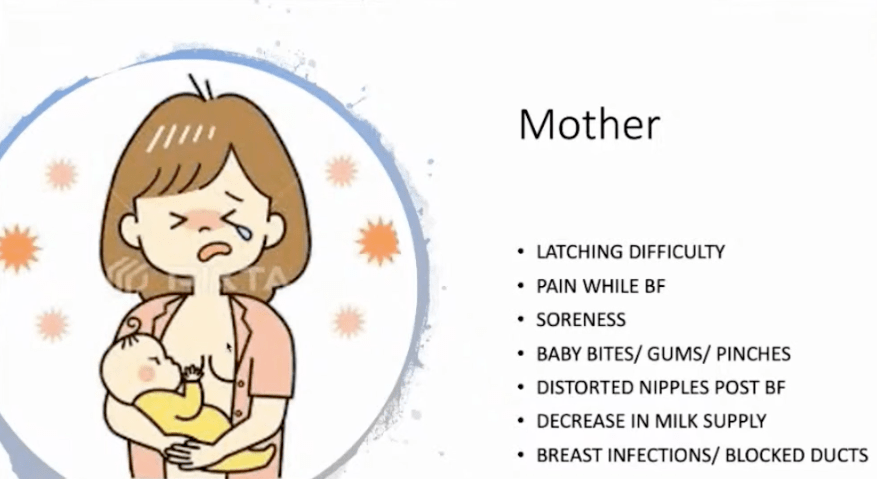
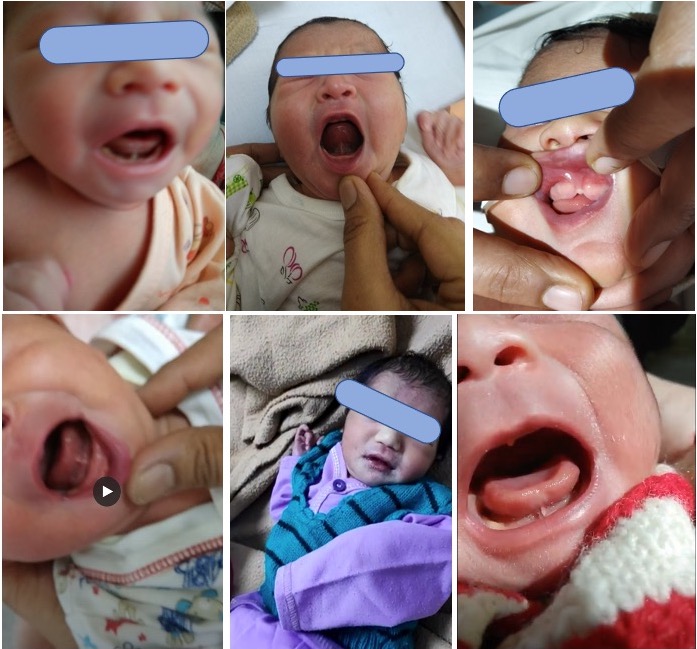
Oral restrictions in the baby are the Frenula (mucosal connections) that can be present under the upper lip(labial frenulum) and /or under the tongue (lingual frenulum) and or between the cheek and gum(buccal frenulum).They can cause problem if they restrict the normal functioning of tongue and other muscles during the process of breastfeeding / bottle feeding.

There is so much controversy around it because of many reasons.

  1. Mostly it’s something that we have started exploring recently and most of the health care providers have not had much knowledge and experience about these issues.
  2. As oral restrictions are not the ONLY reason to cause breastfeeding difficulties, If we just cut these restrictions, without addressing the other issues as well, the challenges do not settle (or at times worsen), thus making people feel that corrective procedures are useless.
  3. Similarly, if other factors are worked upon, in quite a lot of dyads, even in the presence of oral restrictions, the challenges settle, thus the hypothesis that we do not need to do any procedures!
  4. There are not much conclusive studies on these topics.

So, most of the clinicians/ providers see things based on their perspective and experiences only and give their opinion accordingly. What is needed is a comprehensive assessment of the whole mother baby dyad, so that an idea of all that’s going sub optimally can be assessed and thus corrected.

This needs a team of trained professionals working together and thus can mean more expenses.

In a country like ours, there is a scarcity of teamwork or rather appropriately trained professionals (except maybe in major metro cities) and also there is lots of skepticism and hesitancy in families against paying for breastfeeding support!

To understand it further let’s talk about a few factors that can have implications on breastfeeding.

1 Positioning of the baby inside the uterus

A baby in a vertex position, with ample amniotic fluid, no cord issues, Versus a baby who had positioning issues in utero (eg: Cord around neck, oblique lie, twin pregnancy, uterine myomas etc), both can behave differently while breastfeeding.

2 Type of birth:

A calm comfortable spontaneous vaginal birth, with baby being kept skin to skin with the parent, generally results in baby latching on his/ her own without any need of support..

(while we are at it, lets discuss birth here too! Contrary to popular belief, we ourselves are the people most responsible for our changing births and increasing rates of cesarean sections.For example,Our dietary habits, Our sedentary lifestyles, Lack of knowledge about pregnancy and child birth…..are a few factors)

Versus an augmented labor with lots of non-natural uterine contractions, Interventions like fundal pressure/ forceps / ventouse/cesarean…..resulting in possible physical and mental trauma, separation , delayed initiation of breastfeeding. Versus a Cesarean section….All have different impact on baby’s natural reflexes and thus on baby’s breastfeeding efficiency.

3 Early days after birth

The kind of breastfeeding knowledge and motivation the family has. If they have had Antenatal Breastfeeding education.

The kind of support / information they got post birth.

4 Later days how the baby is being kept, like if the baby is kept mostly swaddled on his or her back, or mostly on the parents’ body. If the baby held and soothed each time the baby is distressed. Is the baby kept lots in baby carriers / car seats etc

For a mother and baby to breastfeed well, we need a healthy and comfortable mom a healthy and comfortable baby and ample opportunities to breastfeed on demand.

Anything that interferes with it can cause breastfeeding challenges.

So if we just look at the frenulums and overlook the other issues, problems will remain.On the other hand if we sort out the other challenges and then if the challenges persist , we get the frenulums corrected, we get optimal benefits!

Animal Bites & Rabies

RABIES- INFORMATION & FACTS

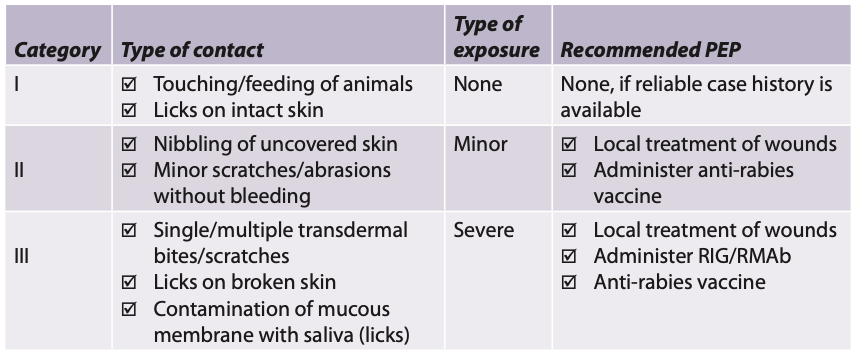
  • Rabies is a life threatening disease caused by  a virus transmitted to human beings by bites from rabid animals. It can be prevented by timely local treatment of wounds, administration of rabies immunoglobulins (RIGs)/rabies monoclonal antibodies (RMAbs), and anti-rabies vaccines. 
  • An estimated 59,000 human rabies deaths occur every year. India alone reports an estimated 20,000 deaths per year and 17.4 million animal bites every year.
  • Rabies is transmitted to humans largely by dogs and cats (>97%). 
  • Wild animals (2%) such as mongoose, foxes, jackals, wild dogs, wild rodents, and occasionally by monkeys, horses, donkeys, and others. 
  • Domestic rats, rabbits, and birds & Human bites are ordinarily not known to transmit rabies 

VACCINATION STATUS OF THE BITING ANIMAL

Although unvaccinated animals are more likely to transmit rabies, vaccinated animals can also do so if the vaccination of the biting animal was ineffective for any reason. A history of rabies vaccination in an animal is not always a guarantee that the biting animal can not transmit rabies. 

Animal vaccine failures may occur because of reasons like 

  • Not enough time elapsed since vaccination(< 3 weeks)
  • Poor health status of the animal
  • Incomplete course (schedule for dogs is – 1st dose at age 12 weeks, then 12 months & then a booster every 3 yrs) or missed boosters, etc. 
  • Vaccines used in animals are not 100% protective, so even a fully vaccinated animal carries a 5-10% risk of getting the rabies.

Hence, post exposure prophylaxis should be given irrespective of vaccination status of the animal.

BITE BY ANIMALS OTHER THAN DOGS  AND CATS

Bite by all wild animals should be treated as category III exposure. All animal bites in forest or in the wild should be treated as category III exposure.

VACCINATION NOT NEED IN THESE CASES 

Bite by home rats, geese, squirrel, hare and rabbits 

Pre-exposure prophylaxis (Pre-EP) is recommended  in the following two situations. 

• Children exposed to pets in home. 

• Children identified to have a higher risk of being bitten by dogs. For practical reasons, any child who is now participating in any outdoor sport where a parent cannot be present should be considered a High Risk as there is lot of dog population in every society on every street.

WHAT TO DO AFTER AN ANIMAL BITE

  • All animal bites should be washed for 10–15 minutes with copious amount of water and soap (detergent soap preferable) 
  • After allowing the wounds to dry for few minutes, antiseptics like povidone iodine and surgical spirit should be applied on all wounds to chemically inactivate or kill the rabies virus at the site of bite. 
  • Rabies risk is reduced to almost 50% by early and proper local treatment of wounds. Routine suturing of wounds and surgical dressing is not recommended. 

Further Vaccine or Antibody administration is decided as per the category of the Bite and previous vaccination status of the patient

ANTI- RABIES SERUM(ARS)- Antibody or Immunoglobulin

All category III bites should be administered ARS as soon as possible, preferably in first  24 hours but not later than 7th day of the first vaccine dose 

The WHO recommends that if available, the use of Rabies Monoclonal Antibodies(RMAb)  should be preferred instead of Rabies Immuno Globulin (RIG)

ANTI-RABIES VACCINE (ARV) schedule by WHO(2022)

PRE- Exposure

On Days 0 and 7.

POST Exposure

A 4-dose schedule of either of the following-

  • 1-site intramuscular administration of vaccine on Days 0, 3, 7 and between day 14-28 (Total doses=1+1+1+1=4) or 
  • 2-sites administration on days 0 and then on days 7, 21(Total doses=2+1+1=4)

In a rabies endemic country like India where there is sustained dog-to-dog transmission, every warm blooded animal bite is suspected as a potentially rabid animal bite. As rabies is practically 100% fatal, even bites to a previously vaccinated individual should be  treated  as a “Medical Emergency” and the post exposure prophylaxis must be provided immediately.

BOOSTER DOSES IN RE-EXPOSURE OF PREVIOUSLY VACCINATED INDIVIDUALS

  • Re-Exposure within 3 months of completing a previous course of post exposure shots- No need of re-vaccination. Routine first aid care of wound should be done.
  • Re-exposure beyond 3 months of receiving Anti rabies vaccine – give only two booster doses intramuscularly on days 0 and 3. Proper wound toilet should be done. 
  • Treatment with Rabies Immunolobulin (RIG)/Mono clonal Antibody is not required.

WHERE CAN WE GET ANTI RABIES TITERS DONE TO ACCESS THE EFFICACY OF THE VACCINES

Anti Rabies Titers can be done at National Centre For Disease Control, Shamnath Marg, Delhi – 110 054 on request. NCDC  (NICD)- 011-23909257 , 011-23913148, 011-23971272/060/344

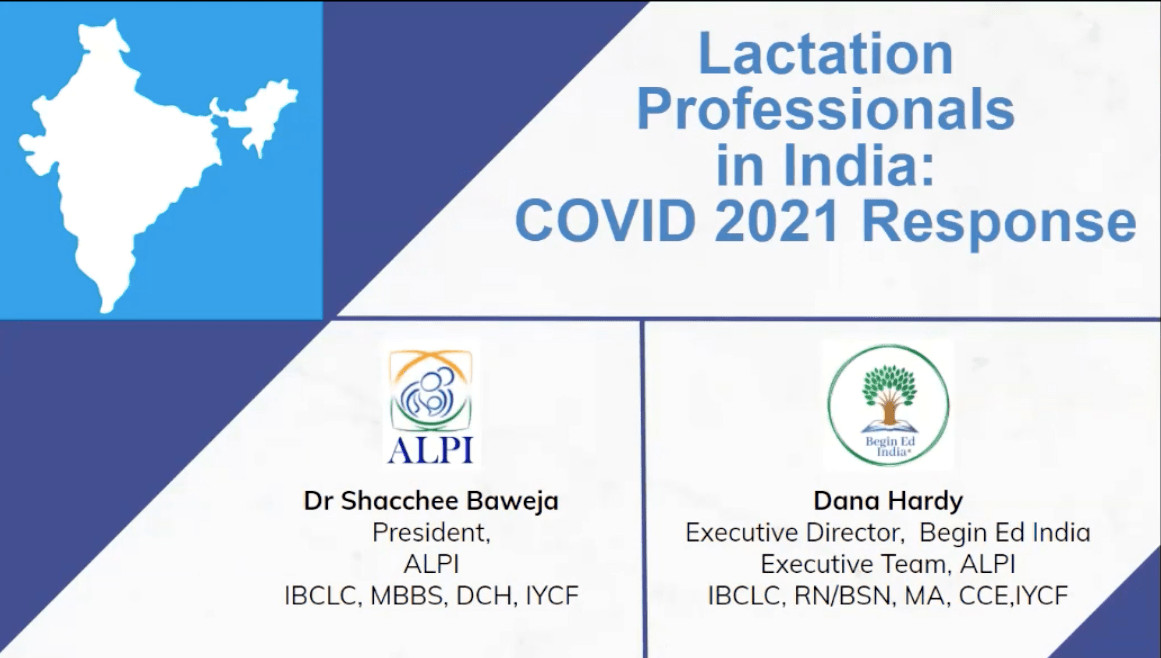
Lactation professionals in India: COVID 2021 response

Begin Ed India and Association of Lactation Professionals India conducted a QnA session for Healthcare professionals involved in care of New borns and nursing mothers. It addresses day to day queries of Nursing mothers and dilemas faced by healthcare professionals in dealing with breastfeeding issues in the ongoing COVID pandemic.

The Focussed Question and answer session stats at 7 min and ends at 44 min, while rest of the session is also very informative on the topic.